

CHELLERI: SIX SYMPHONIES NOUVELLES
CHELLERI: SIX SYMPHONIES NOUVELLES
Urania Records
Music genre:
In stock
Couldn't load pickup availability
SKU:LDV 14080
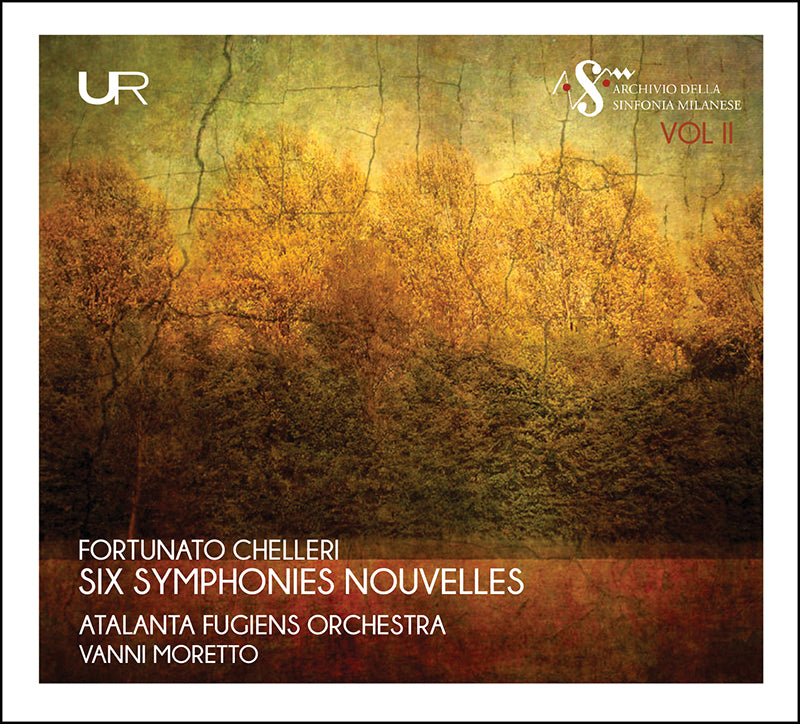
FORTUNATO CHELLERI (1690-1757)
SIX SYMPHONIES NOUVELLES
Symphony No. 1 in D Major
Symphony No. 2 in C Major
Symphony no. 3 in B-flat Major
Symphony No. 4 in A Major
Symphony No. 5 in D Major
Symphony no. 6 in B-flat Major
Brussels Symphony in B-flat Major
Polonaise from the Brussels Symphony in A Major
ARCHIVE OF THE MILAN SYMPHONY
Atalanta Fugiens Orchestra
Vanni Moretto, conductor
1 CD – 24 pages booklet in Italian and English
Born between 1686 and 1690, Fortunato Chelleri remains the "oldest" of the symphonists in our series. In his corpus, the symphony, understood in the modern sense, seems to be the culmination of a long journey of stylistic research and transformation. Chelleri was a great traveler and imitator, and these "Six New Sinfonias" are clearly six stylistic studies on the new trends vogue in Europe in the 1730s and 1740s. However, their clear affiliation with the so-called Lombard style is confirmed by the epithet "of Milan" used by Burney when citing their composer.
As a symphonist, Chelleri uses decisive, clear, and positive gestures; his phrasing is clear and distinct. Like all "Galante" composers, he banishes minor keys, relegating them to a few slow movements, where, at times, he indulges in an almost heartbreaking affection, which is also evident in the "Adagio con amore" indication of the Brussels Symphony in B-flat.
Born between 1686 and 1690, Chelleri is far older than any other symphonist in our series. In his Corpus, the symphony understood in a modern sense, is the fulfillment of a long path of research and transformation of style. Chelleri was a great imitator, and these “Six new symphonies” are clearly six stylistic studies on the new trends in vogue in Europe in the 1730s and 1740s. That they belong to the so-called Lombard style is confirmed by the fact that Burney uses the words “of Milan” when he cites their author. The symphonist Chelleri makes neat, positive gestures, his phrasing is clear and sharp. Like all gallant composers, he banishes the minor keys, possibly relegating them to slow movements where, at times, he lets himself go to almost heart-wrenching affection, as the recommendation Adagio con amore [adagio with love] in the Brussels Symphony in B flat also shows

-

Shipping physical products
Free shipping in Europe (EU), for 4 items or more - Request a quote for shipping costs for non-EU countries
-
Digital product delivery
Digital products will be delivered directly on the website and you will also receive an email with a link to download the files.
-
Write a review
Above, you can write a review of the product you purchased; we would be happy to hear your opinion.
