


THE ULTIMATE SOUND ON VINYL - Velut Luna
THE ULTIMATE SOUND ON VINYL - Velut Luna
Velut Luna
Genere musicale: Classica, JAZZ, Blues, Elettronico, and Latino
In stock
Couldn't load pickup availability
SKU:CVLD411LP
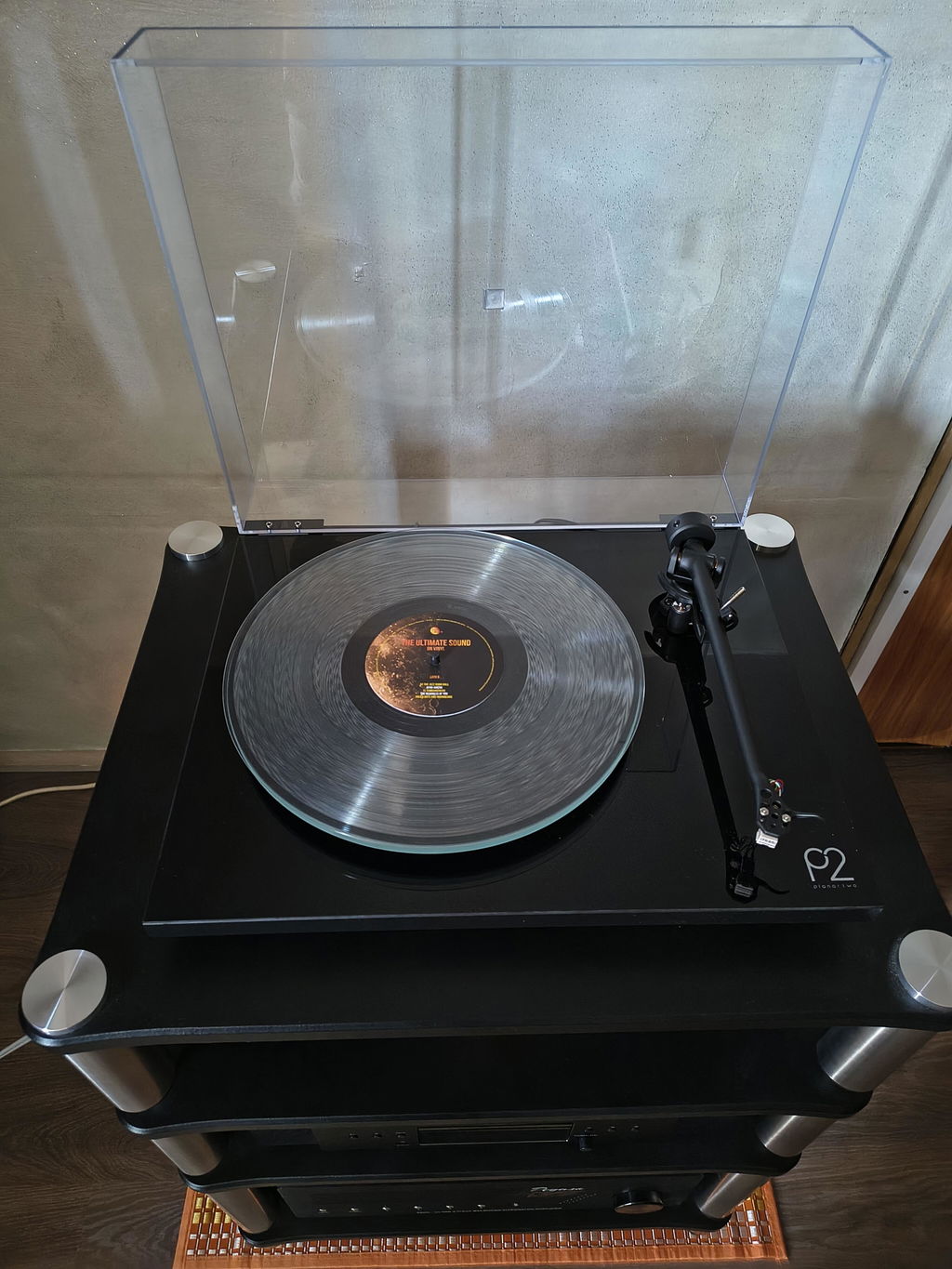
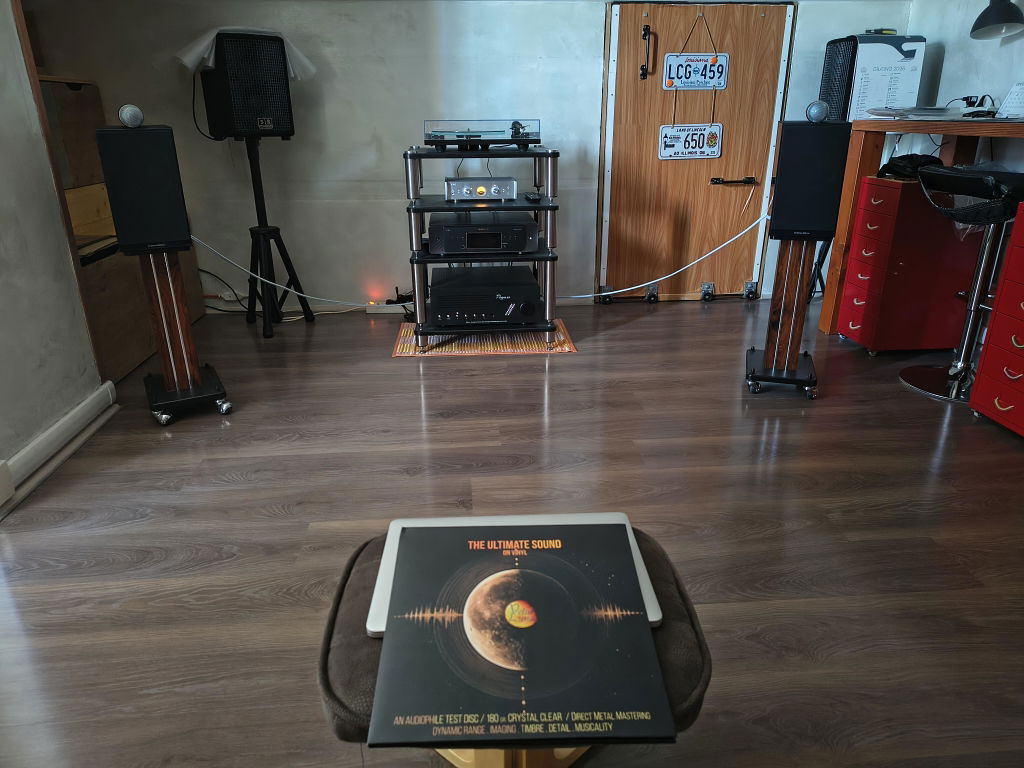
THE ULTIMATE SOUND ON VINYL
- Available for sale: LP (Direct Metal Mastering)
- FREE: 2 CDs from the Velut Luna catalog, only for orders received by May 10, 2026
- Shipping starts on May 11, 2026
A SIDE – 19:15
- Sonata No. 1 in G major, BWV1001, for solo violin, Adagio, 1:59
J. S. Bach - Barbara Broz, violin
Magister Recording Area, Preganziol, 2009
- Fables Of Faubus, 1:49
C. Mingus – Salvatore Maiore, double bass, Maria Vicentini, viola
S. Giacomo Centro d’Arte, Albignasego, 2019
- Simple Symphony op. 4, Playful Pizzicato, 3:09
B. Britten – I Solisti dell’Olimpico, Giovanni Battista Rigon, conductor
Teatro Olimpico, Vicenza, 2003
- Adios Nonino, 3:15
A Piazzolla – Loredana Piluso, piano
Chiesa di S. Apollinare, Lonigo, 2018
- Midnight’s Summer Dream op. 21, Overture, 3:43
F. Mendelssohn Bartholdy – Orchestra di Padova e del Veneto, Zsolt Hamar, conductor
Auditorium Pollini, Padova, 2007
- “Prologue, can it be?” from “Pagliacci”, 5:15
R. Leoncavallo – Orchestra U. Giordano, Gianna Fratta, conductor, Simone Piazzola, baritone
Auditorium del Conservatorio U. Giordano, Foggia, 2006
B SIDE – 20:21
- At The Jazz Band Ball, 3:36
L. Shields – Storyville Jazz Band
Magister Recording Area, Preganziol, 2006
- Afro-Amero *, 4:51
P. Faini – Art Percussion Ensemble
Auditorium Pollini, Padova, 2011
- El Cumbanchero, 4:24
R. Hernandez – Latin Jazz Band
Teatro Pio X, Cartigliano, 2004
- The Nearness Of You, 3:25
H. Washington, H. Carmichael – Lucia Minetti, Pietro Ballestrero, Stefano Profeta
Magister Recording Area, Preganziol, 2017
- Polka Dots And Moonbeans, 4:03
J. Van Heusen, J. Burks – Massimo Salvagnini Quartet, Stefano Riva
Magister Recording Area, Preganziol, 2009
All original HD digital recordings and mix made by Marco Lincetto, except for * made by Matteo Costa. Analog remix and remastering made by Marco Lincetto at VLS Studio, Naquera (Spain) on April, 2, 2026. Graphics and Layout by L’Image, Padova. Cover photo by Marco Lincetto
Description:
The concept of this Project is to put your analog system to the test, in particular to verify the correct calibration and tuning of the cartridge-tonearm-turntable system. The most critical parameters on which I focused my attention, and therefore the musical verification tests, are obviously dynamic capacity, understood as both macro-dynamic and micro-dynamic, the correct reconstruction of the sound image, and the ability to reproduce the lowest frequencies of the sound spectrum. Regarding timbral fidelity, I have chosen, as we will see, a fundamental test to demonstrate how "timbre" in an absolute sense simply does not exist, depending exclusively on the context in which the recording is made.
But let's proceed with a detailed track-by-track analysis.
The concept of this Project is to put your analog system to the test, in particular to verify the correct calibration and tuning of the head-arm-turntable system. The most critical parameters towards which I have focused attention and therefore the verification musical tests are obviously the dynamic capacity, understood both as macro dynamic and micro dynamic, the correct reconstruction of the sound image, the ability to reproduce the lower frequencies of the sound spectrum. Regarding timbre fidelity, I have chosen, as we will see, a fundamental test to demonstrate how “timbre” in an absolute sense simply does not exist, depending exclusively on the context in which the recording is made.
But let's go and propose a detailed track-by-track analysis
A1
- Sonata No. 1 in G major, BWV1001, for solo violin, Adagio, 1:59
J. S. Bach - Barbara Broz, violin
Magister Recording Area, Preganziol, 2009
SOUND IMAGE and TIMBRE.
This track is divided into three brief, continuous fragments of approximately 40 seconds each, featuring the same musical passage performed in three different acoustic environments. Specifically, the first fragment is recorded in the studio's large hall, which has the typical acoustics of a small auditorium, with microphones positioned 1 meter from the instrument: what you should hear is a present but ambient, rich, and three-dimensional sound. The second fragment has the instrument positioned 6 meters from the microphones: in this case, you should hear the sound distinctly recessed in the center behind the speakers with great depth, but also a vaguer, more nuanced, and less detailed sound. Finally, the third fragment is recorded in a small room of 2x3x2.60 meters, rendered almost completely acoustically dead, using the same microphones as for the other two recordings: here you should hear a present, but cruder and sometimes harsh sound.
This test definitively demonstrates that the same instrument, played by the same musician, recorded by the same recording system, but in three different environmental contexts, exhibits VERY different timbral characteristics, thus proving that a generic "violin timbre" simply does not exist in absolute terms.
SOUND AND TIMBRE IMAGE.
This track is divided into three short fragments of approximately 40” each, without interruption, which involve the performance of the same piece fragment in three different acoustic situations. In particular, the first fragment is taken in the studio's large room, which is equipped with the acoustics typical of a small auditorium, with microphones positioned 1 meter away from the instrument: what you will have to hear is a present sound, but set, rich and three-dimensional. The second fragment sees the instrument positioned 6 meters from the microphones: in this case you will have to hear the sound decidedly backward in the center behind speakers with great depth, but even one is more vague and nuanced and less detailed. Finally, the third fragment is recorded in a small room measuring 2x3x2.60 m, made almost completely acoustically deaf, using the same microphones used for the two other takes: here you will have to hear a present sound, but rawer and at times harsh.
This test definitively demonstrates that the same instrument, played by the same musician, taken from the same recording system, but in three different environmental contexts, presents VERY different timbral characteristics, thus demonstrating a generic one “violin timbre”, simply does not exist in absolute terms.
A2
- Fables Of Faubus, 1:49
C. Mingus – Salvatore Maiore, double bass, Maria Vicentini, viola
S. Giacomo Centro d’Arte, Albignasego, 2019
BASS FREQUENCIES and SOUND IMAGE
This recording was made using the three-microphone sound recording technique, known as DECCA TREE.
You should hear the double bass in the center right, a little further towards the center, and the viola in the center left, a little further to the left.
In reality, especially in the lowest spectrum of the double bass notes, these expand quite broadly across the entire sound front; they must fill the listening environment, maintaining speed and control in the first part and then expanding into longer and softer sounds in the last 25 seconds or so of the piece. This is a critical track for the reading system, so if you hear any distortion, it should be attributed to the system. The track is designed to challenge the tracking ability of the cartridge/tonearm.
LOW FREQUENCIES and SOUND IMAGE
This recording was made using the three-microphone sound recording technique, known as DECCA TREE.
You will need to hear the double bass in the center right, a little’ further toward the center, and the viola in the center left, a little’ further to the left.
In reality, especially in the lower spectrum of the double bass notes, these expand quite far along the entire sound front, they must fill the listening environment, maintaining speed and control in the first part and then expanding into longer, softer sounds in the last 25 seconds or so of the piece. This is a critical track for the reading system, so if you hear any distortion, it will be blamed on the system. The track is intended to undermine the head / arm's tracking ability.
A3
- Simple Symphony op. 4, Playful Pizzicato, 3:09
B. Britten – I Solisti dell’Olimpico, Giovanni Battista Rigon, conductor
Teatro Olimpico, Vicenza, 2003
MICRO DYNAMICS and SPEED
The recording was made live at the Teatro Olimpico in Vicenza, using my classic stereophonic setup based on two pairs of microphones mechanically aligned in phase: an A-B pair with omnidirectional microphones and a NOS pair with cardioid microphones. The very famous and pleasant piece features the entire performance by the string orchestra in pizzicato mode. The sustained allegro tempo requires extreme speed from the pizzicati themselves, which should be perceived clearly, not confusedly, even if properly situated in the hall, which has generous natural reverberation. You should hear the sharp attack of the pizzicato, which then decays without anomalous tails of unnatural rumble. Also excellent as a macro dynamic test.
MICRO DYNAMIC
The recording was made live at the Teatro Olimpico in Vicenza, using my classic stereophonic configuration based on two pairs of microphones aligned with each other in the mechanical phase, an AB pair with omnidirectional microphones and a NOS pair with cardioid microphones. The very famous and pleasant piece involves the entire performance by the string orchestra using the pizzicato mode. The sustained allegro tempo involves an extreme speed of the pizzicatos themselves which must be perceived clearly, not confusedly, even if correctly set in the room, equipped with generous natural reverberation. You will have to feel the sharp attack of the pizzicato which then degrades without abnormal tails of unnatural rumble. Also great as a dynamic macro test
A4
- Adios Nonino, 3:15
A Piazzolla – Loredana Piluso, piano
Chiesa di S. Apollinare, Lonigo, 2018
PIANO (macro and micro dynamics and tracking capability)
This is undoubtedly one of my best solo piano recordings ever made. Recorded with 2 + 3 microphones, meaning a main stereo pair positioned 1.5 meters from the instrument, plus three microphones, also omnidirectional, but positioned in a line near the piano's soundboard, to ensure detail and precision of the percussive hammer attack.
The piano recorded is the largest grand piano in existence: 333 cm long, weighing approximately 650 kilograms and built entirely by hand in about a year, the Borgato Grand Prix 333 is without a doubt the absolute king of grand pianos. In particular, the depth and power of the low notes, which appear immediately at the beginning of the piece with a decidedly impressive plunge, should be noted. Therefore, it is a very important dynamic test, but also a test for the tracking capability of the system.
PIANO (macro and micro dynamics and tracking capabilities)
This is undoubtedly one of my best solo piano recordings ever made. Filmed with 2 + 3 microphones, i.e. a main stereo pair positioned 1.5 metres from the instrument, plus three microphones, always omnidirectional, but positioned in a line near the piano's soundboard, to ensure detail and precision of the hammer percussive attack.
The revived piano is the largest grand piano in existence: 333 cm long, weighing approximately 650 kilograms and built entirely by hand in about a year, the Borgato Grand Prix 333 is undoubtedly the absolute king of grand pianos. In particular, it is worth noting the depth and power of the low notes, which appear immediately at the beginning of the piece with a decidedly impressive lunge. So, still a very important dynamic test, but also u test for the tracking capability of the system.
A5
- Midnight’s Summer Dream op. 21, Ouverture, 3:43
F. Mendelssohn Bartholdy – Orchestra di Padova e del Veneto, Zsolt Hamar, conductor
Auditorium Pollini, Padova, 2007
DYNAMICS
Live recording made using a mixed technique based on 6 microphones: a central DECCA TREE system, with the addition of a pair of omnidirectional microphones positioned in line with the Decca Tree and very wide to the right and left, and finally an accent microphone on the percussion to provide the right detail and attack precision.
What should be appreciated is the dynamic capability of the system; that is, once an adequate volume is found for the initial pianissimo, verify the system's ability to hold up during fortissimo peaks.
DYNAMICS
Recording made live using a mixed technique based on 6 microphones: a central DECCA TREE, with the addition of a pair of omnidirectional microphones positioned in line with the Decca Tree and very wide on the right and left and finally an accent microphone on the percussion to give the right detail and precision of the attack.
The thing that should be appreciated is the dynamic capacity of the system, that is, once an adequate volume has been found for the initial pianissimo, verify the holding capacity of the system in the fortissimo peaks.
A6
- “Prologo, si può?” from “Pagliacci”, 5:15
R. Leoncavallo – Orchestra U. Giordano, Gianna Fratta, conductor, Simone Piazzola, baritone
Auditorium del Conservatorio U. Giordano, Foggia, 2006
SOUND IMAGE and DYNAMICS and TRACKING CAPABILITY
The recording was made inside the Auditorium of the Foggia Conservatory, however, by simulating with the positioning of the orchestra and soloist the typical situation of the opera house, i.e., the orchestra advanced but lower than the soloist (the "orchestra pit" effect) and the soloist physically set back but raised relative to the orchestra itself. The sonic effect that should be perceived is a soft and diffused orchestral sound, and the authoritative, present voice of the baritone, due to the sound projection capability of the operatic vocal setting, yet at the same time immersed in the theatre environment.
This is also a demanding dynamic and tracking test, as it is deliberately placed in the final grooves, notoriously critical for reading dynamically challenging programs like this one.
SOUND IMAGE AND DYNAMIC AND TRACKING
The recording was made inside the Auditorium of the Foggia Conservatory, however, simulating with the positioning of the orchestra and soloist the typical situation of the Teatro Lirico, that is, the orchestra advanced, but lower than the soloist (effect “orchestra pit”) and precisely the soloist physically backward, but raised above the orchestra itself. The sound effect that must be perceived is of a soft and diffuse orchestral sound, and the voice of the authoritative baritone, present, depending on the ability of the lyrical vocal setting to project the sound, and yet at the same time immersed in the theatre environment.
It is also a challenging dynamic and tracking test, as it is deliberately placed in the final grooves, which are notoriously critical for reading dynamically challenging programs like this one.
B1
- At The Jazz Band Ball, 3:36
L. Shields – Storyville Jazz Band
Magister Recording Area, Preganziol, 2006
SOUND DETAIL
This recording was made in a pure live studio and in a single take. The small Dixieland group was arranged in a semicircle, with the wind instruments and the banjo on the far right, and the drums in the center, slightly raised, immediately behind the group. This is once again a useful test to evaluate a very marked dynamic range, to visualize individual instruments as they take solos, correctly localized between the left and right of the sound image, in turn. It is also very useful for testing the ability to reconstruct sound detail, particularly during the tuba solo. You should hear a kind of sizzle more or less in the center and recognize it for what it is, which is the open snare drum wires vibrating sympathetically with the low frequencies of the tuba. Finally, it is useful to note the significant dynamic difference between the human voice that sets the tempo at the beginning of the track and the much greater sound pressure of the instruments.
SOUND DETAIL
This recording was made in a very pure live studio and single take. The small Dixieland group was arranged with the horns, and the banjo on the far right, in a semicircle and the drums in the centre, slightly’ raised, immediately behind the group. Once again it is a useful test to evaluate a very marked dynamics, to visualize the individual instruments when they present themselves as soloists correctly located between the left and right of the sound image, in turn, but also very useful to test the ability to reconstruct the sound detail, in particular during the tuba solo, You'll have to hear a kind of sizzle more or less in the center and recognize it for what it is: the open drum snare cord, which vibrates sympathetically with the low frequencies of the tuba. Finally, it is useful to note the important dynamic difference between the human voice that gives the tempo at the beginning of the piece and the much greater sound pressure of the instruments.
B2
- Afro-Amero *, 4:51
P. Faini – Art Percussion Ensemble
Auditorium Pollini, Padova, 2011
DYNAMICS
This is one of the two most challenging tracks to reproduce. We are faced with a rich percussion ensemble that offers a varied, disruptive, and definitive sample of percussive sounds. The two harmonic instruments, namely the marimba on the right and the vibraphone on the left, along with drums of various sizes, a powerful bass drum, bells, and various small percussion instruments, create a very pleasant but also definitively complex sonic fresco for any sound reproduction system. Dynamics are at the highest possible levels, posing dangerous pitfalls for the correct tracking of your cartridge – tonearm – turntable system.
DYNAMICS
This is one of the two most challenging songs to play. We are in the presence of a rich percussion ensemble that offers a diverse, disruptive and definitive sample of percussive sounds. First of all, the two harmonic instruments, the marimba on the right and the vibraphone on the left, and then drums of various sizes, a powerful bass drum, bells and various small percussion instruments, offer a very pleasant, but also definitively complex, sound fresco for any sound reproduction system. Dynamics at the highest possible levels and dangerous pitfalls for the correct traceability of your head – arm – turntable system.
B3
- El Cumbanchero, 4:24
R. Hernandez – Latin Jazz Band
Teatro Pio X, Cartigliano, 2004
DYNAMICS and DETAIL
And this is the second most challenging track… Still great dynamics, but above all very useful for testing the system's resolution capability. It is, in fact, a large big band of over 50 members, including a very rich brass section and typical orchestral woodwinds, and not least, four percussionists playing various typical percussion instruments, from drums to congas to timbales. The recording, made live in a studio inside a theater, features a pickup based on a pair of main omnidirectional microphones and then many other accent microphones used to highlight each individual instrument in the ensemble: therefore, a rich ambient sound combined with very precise detail of each section and each soloist.
DYNAMICS and DETAIL
And this is the second most challenging piece… Still great dynamics, but above all very useful for testing the system's resolution capability. It is in fact a large big band of over 50 members, including a very rich brass section and typical orchestral woodwinds and last but not least four percussionists who play various typical percussion instruments, from drums to congas to timbales. The recording, made live in a studio inside a theater, features a shot based on a pair of main omnidirectional microphones and then many other accent microphobnia used to illuminate each individual instrument in the ensemble: therefore, a rich ambient sound not separated from a very precise detail of each section, each soloist.
B4
- The Nearness Of You, 3:25
H. Washington, H. Carmichael – Lucia Minetti, Pietro Ballestrero, Stefano Profeta
Magister Recording Area, Preganziol, 2017
FEMALE VOICE
The last two tracks are dedicated to the human voice. In this case, Lucia Minetti's voice, a splendid mezzo-soprano with amber and impressive tones, should be heard in its roundness, combined with refined chiaroscuro nuances, over a minimal accompanying fabric provided by classical guitar and double bass. Recorded live in the studio in an entirely analog domain, it can be considered one of my top five recordings of all time.
FEMALE VOICE
The last two pieces are dedicated to the human voice. In this case, Lucia Minetti's voice, a splendid mezzo-soprano with amber and impressive tones, must be heard in its roundness, not separated by refined dark light nuances, on a minimal accompanying fabric guaranteed by the classical guitar and double bass. Live studio recording in an all-analog domain, it can be considered one of my top five recordings of all time.
B5
- Polka Dots And Moonbeans, 4:03
J. Van Heusen, J. Burks – Massimo Salvagnini Quartet, Stefano Riva
Magister Recording Area, Preganziol, 2009
MALE VOICE
We conclude with the refined and warm voice of Stefano Riva, an authentic crooner in the style of great American performers, from Frank Sinatra to Nat King Cole, from Tony Bennet to Kurt Elling. The Roman singer is accompanied by Massimo Salvagnini's Quartet, in soft and enveloping tones. Salvagnini himself treats us to a spectacular baritone saxophone solo at the end.
MALE VOICE
We conclude with the refined and warm voice of Stefano Riva, a true crooner in the style of great American performers, from Frank Sinatra to Nat King Cole, from Tony Bennet to Kurt Elling. The Roman singer is accompanied by Massimo Salvagnini's Quartet, in soft and enveloping tones. Salvagnini himself gives us a spectacular baritone saxophone solo at the end.



-

Spedizioni prodotti fisici
Spedizioni gratuite in Europa (UE), a partire da 4 articoli - Richiedere quatozione per i costi di spedizione per i paesi non UE
-
Consegna prodotti digitali
La consegna dei prodotti digitali avverrà direttamente sul sito e riceverai anche una email con il link per il download dei file.
-
Scrivi una recensione
Qui sopra puoi scrivere una recensione sul prodotto che hai acquistato, saremo felici di conoscere la tua opinione.
